Role
Sole Designer
Team
PM + Engineering + Design mentor + design support as needed
Process
Discovery, User Research, UX Design, Visual Design, Prototyping, A/B Testing, Dev Hand-off
Duration
2022-2024
Status
Shipped
Problem
Customers grappled with room selection, resulting in abandonment and less bookings.
Impact
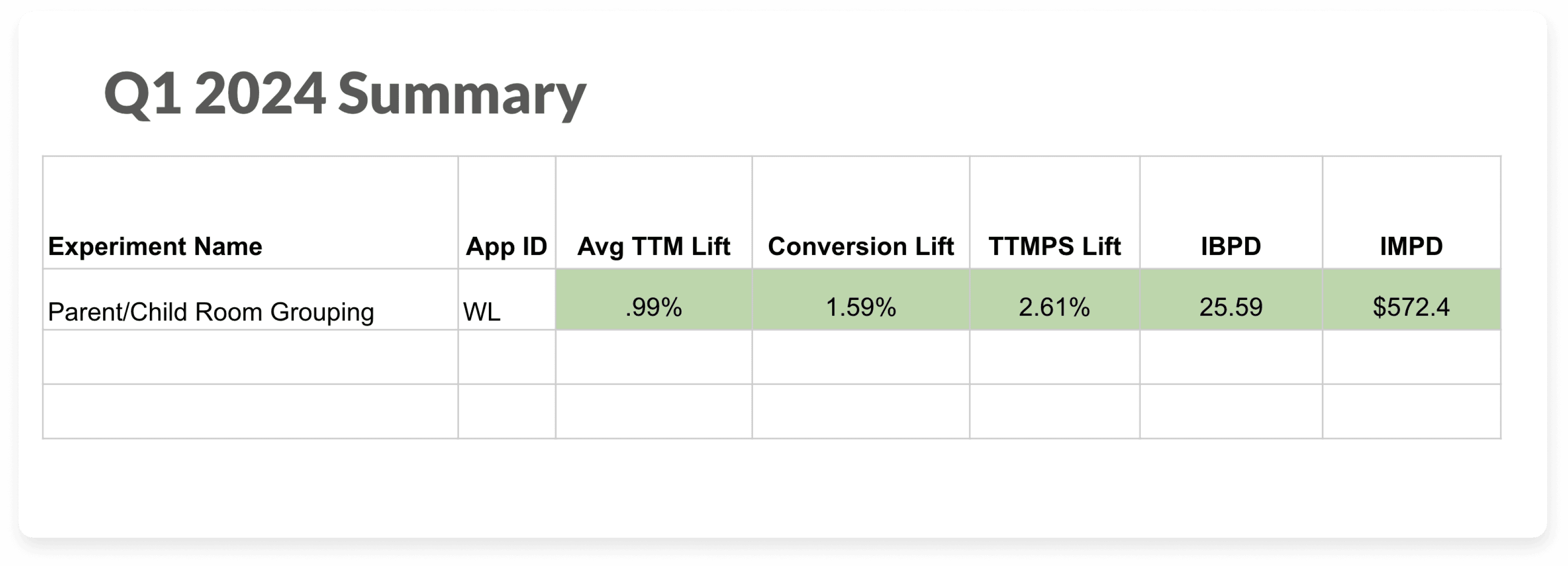
📈 1.59% increase in conversion
📈 2.6% lift in Total True Margin
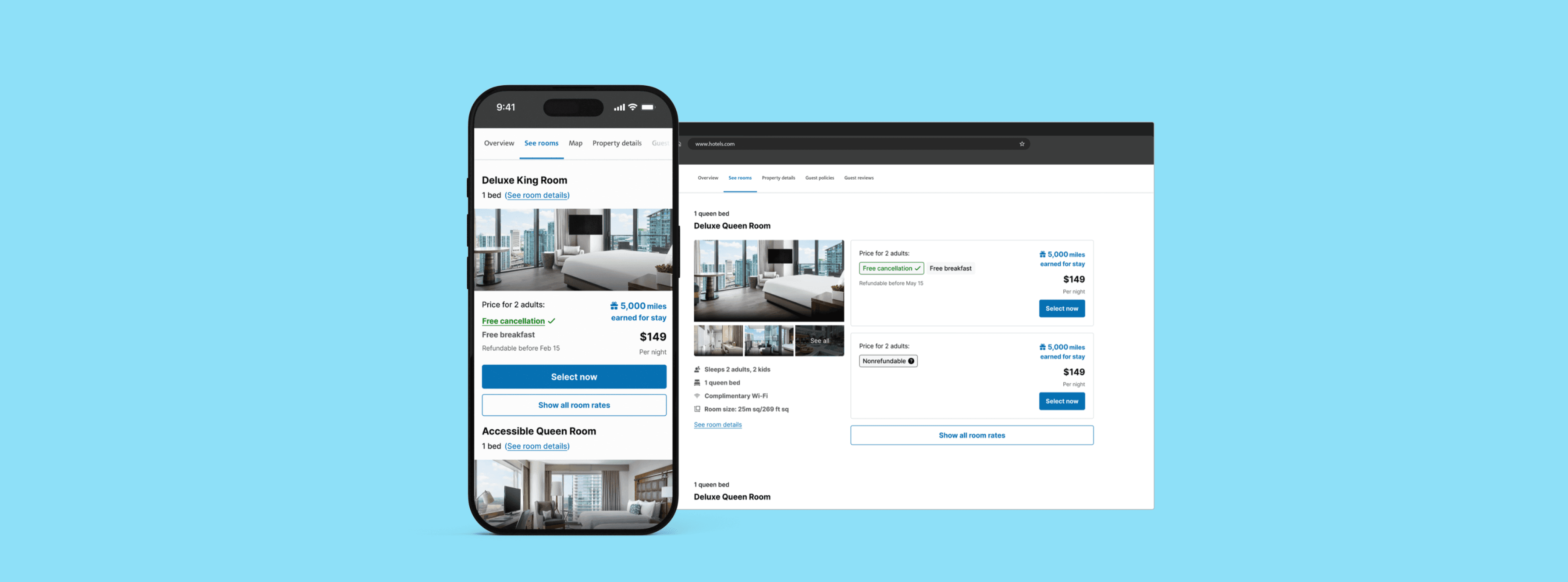
Booking conversion was low due to much friction on the hotel details page, so I led the Hotels team in optimizing the room selection experience across Rocket Travel sites. Rocket Travel by Agoda is an online travel agency specializing in building customized white label booking platforms for its many enterprise-level partners and their customers. By eliminating friction when it came to the room selection flow, we could raise conversion with more completed bookings.
Problem
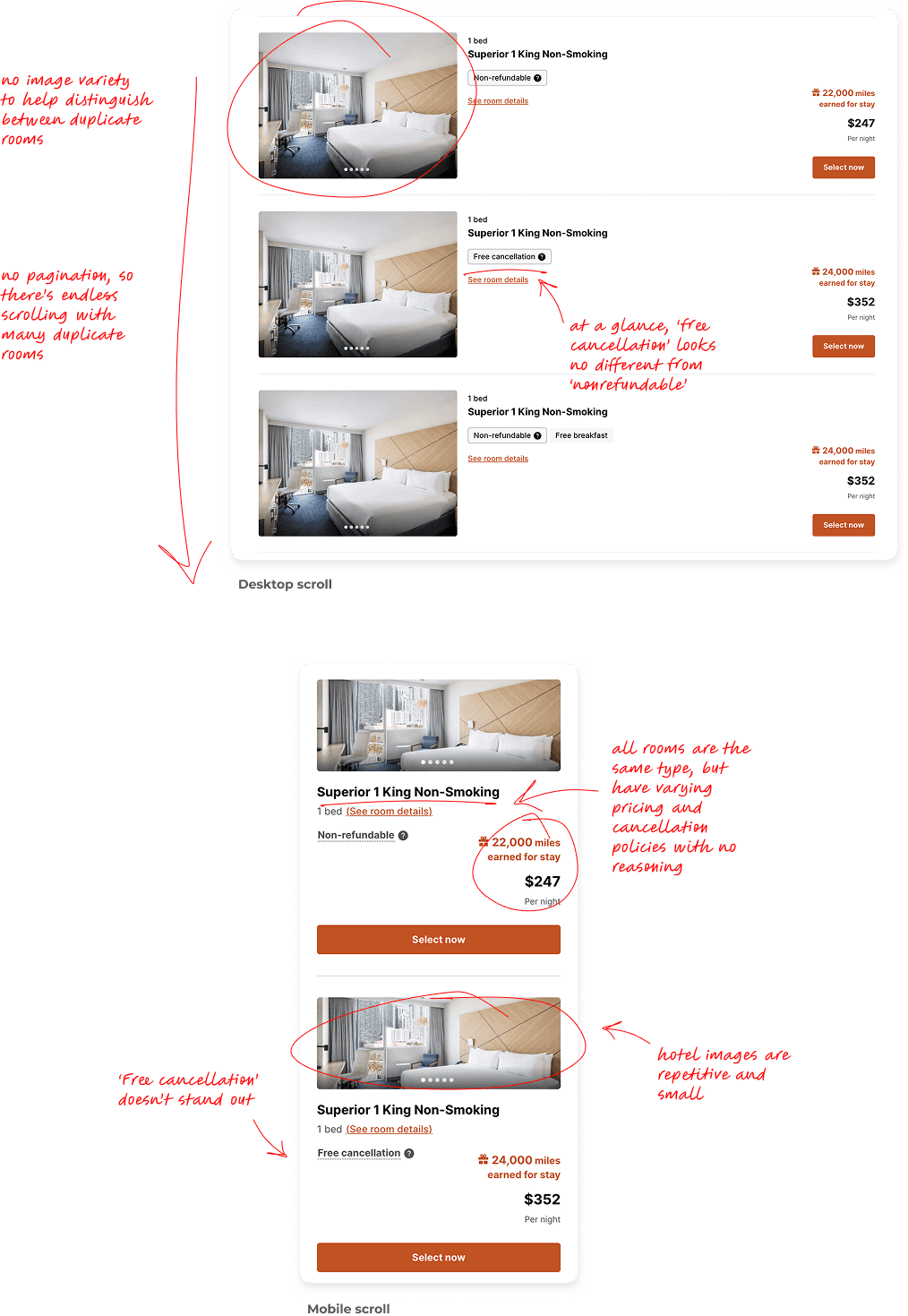
For both earn and redemption, the hotels details page was an infinite list of duplicate room offerings that differed in price, but had little to no distinction between room types, imagery or features. Customers were frustrated and overwhelmed, leaving the site altogether.
Solution
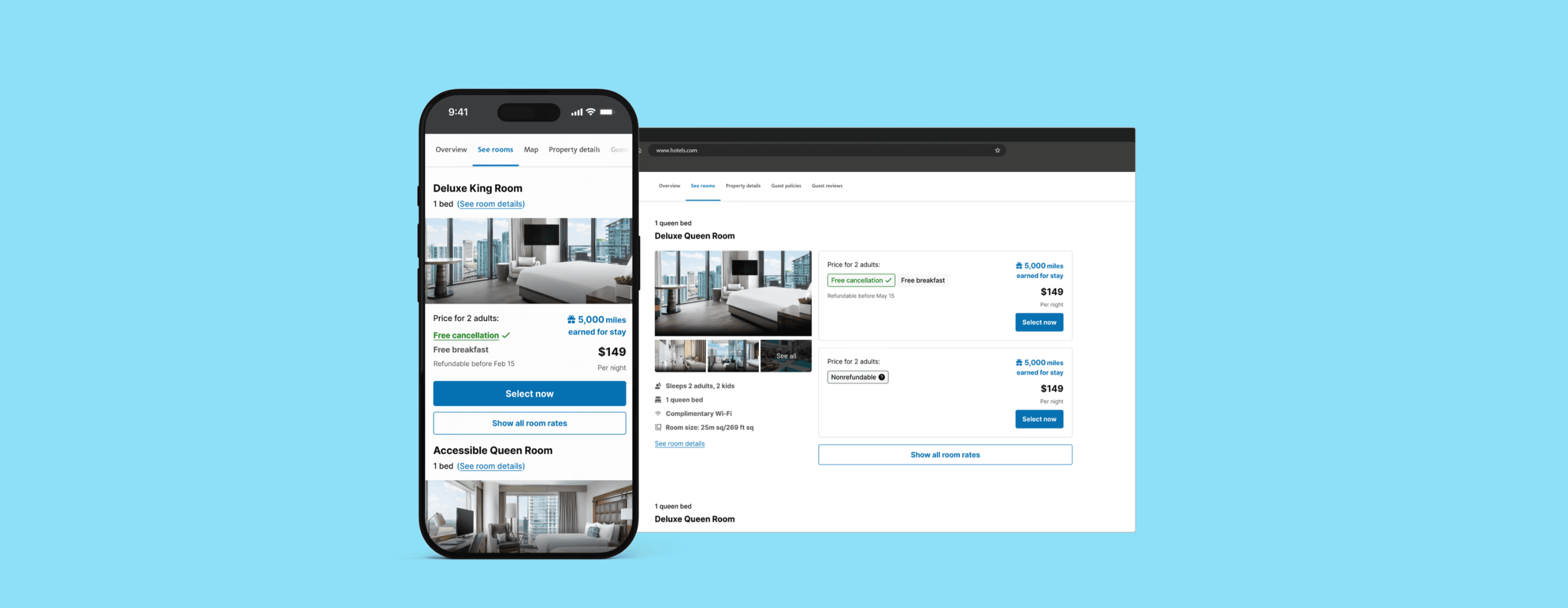
Based on user feedback, my team and I focused on addressing 2 key issues: nesting “child” rooms within “parent” room categories, easing cognitive load, and introducing pagination to reduce scroll fatigue. These changes were implemented simultaneously, increasing both conversion and margin.
By implementing room groupings, conversion increased by 1.59% across all white label partners we tested on. Customers also booked more expensive rooms and tacked on extras to their purchase, resulting in a 2.61% lift in Total True Margin, earning an average of $572 in Incremental Margin Per Day. 🎉
The issues around the room selection experience had been longstanding, and as the organization scaled and continued to acquire more partners, it became a much higher priority with Product & Leadership. Before starting anything, I took the time to audit the existing experience and identify where it fell short.
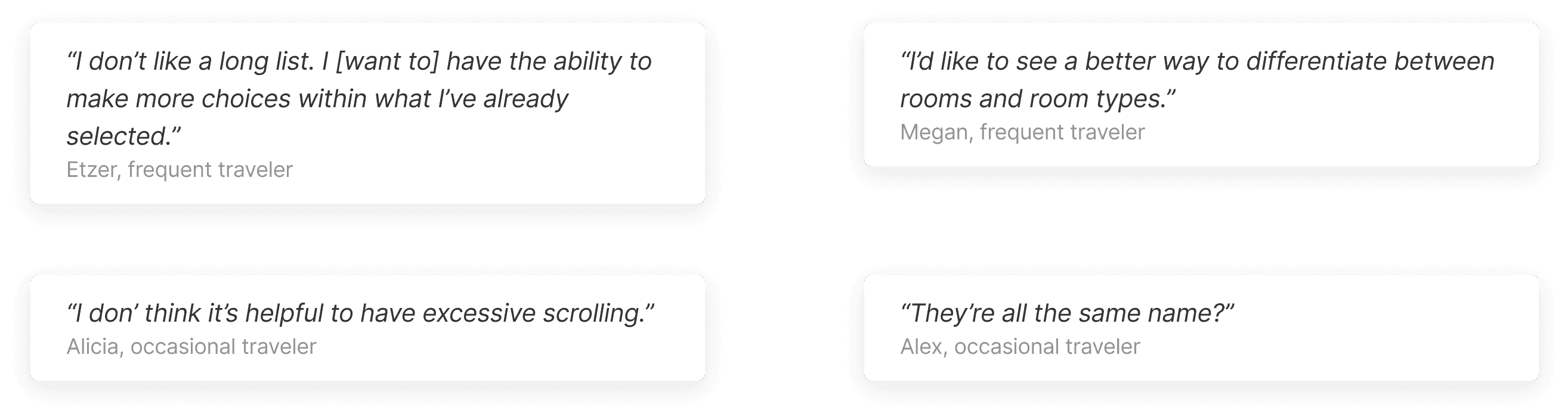
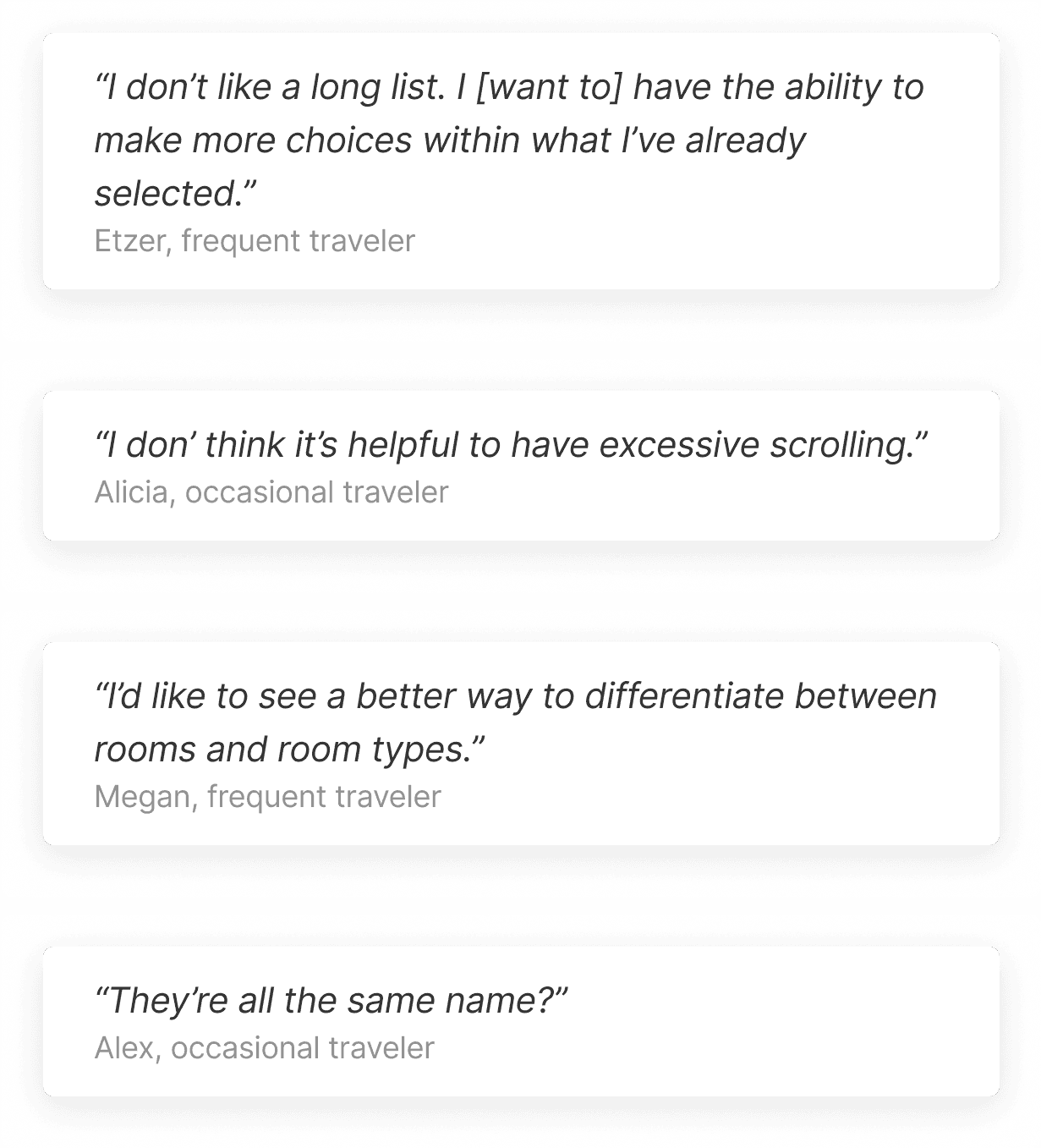
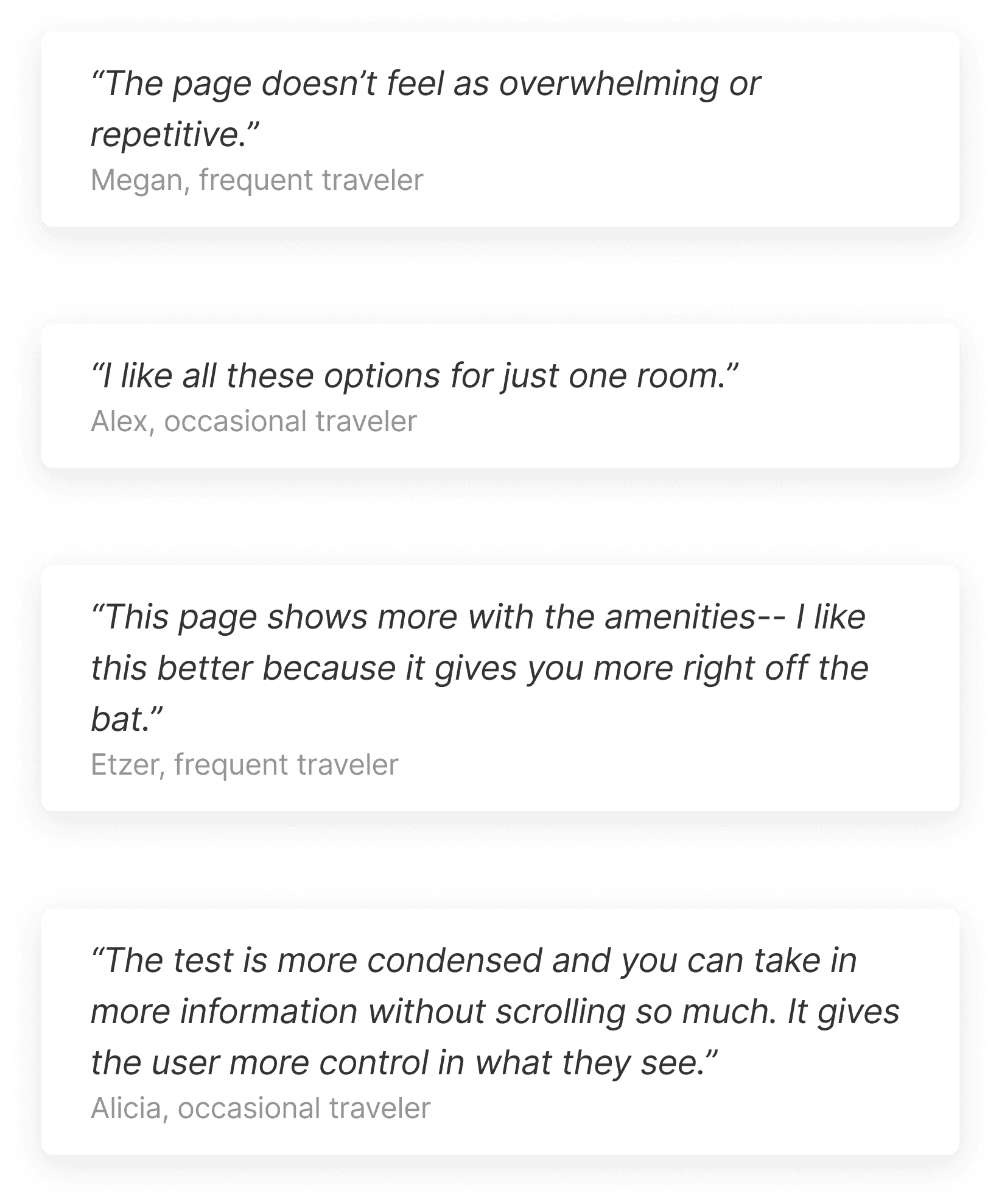
*Comments we received from users
Doom Scrolling UX 👎🏽
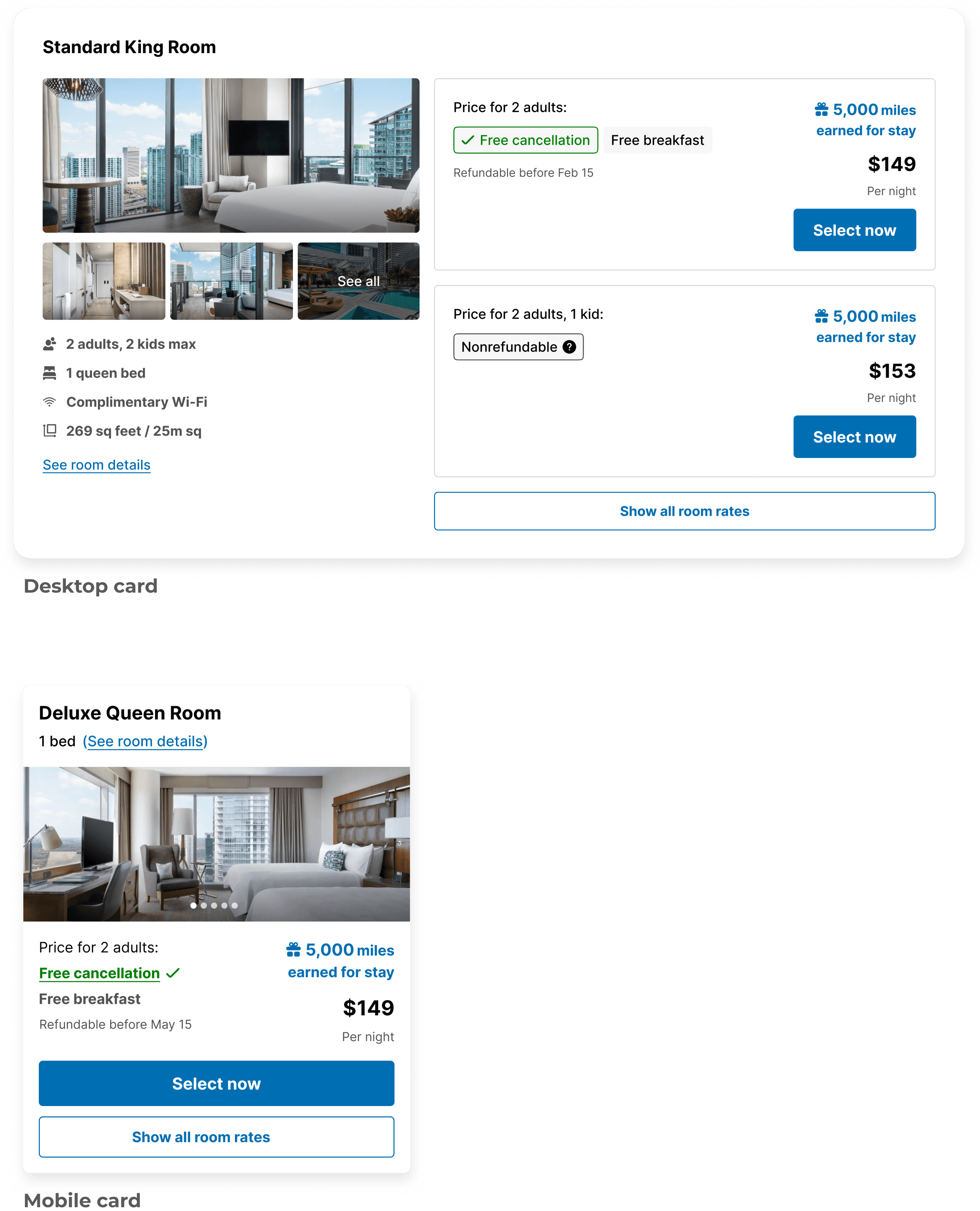
Desktop & mobile room cards

Discovery & Analysis
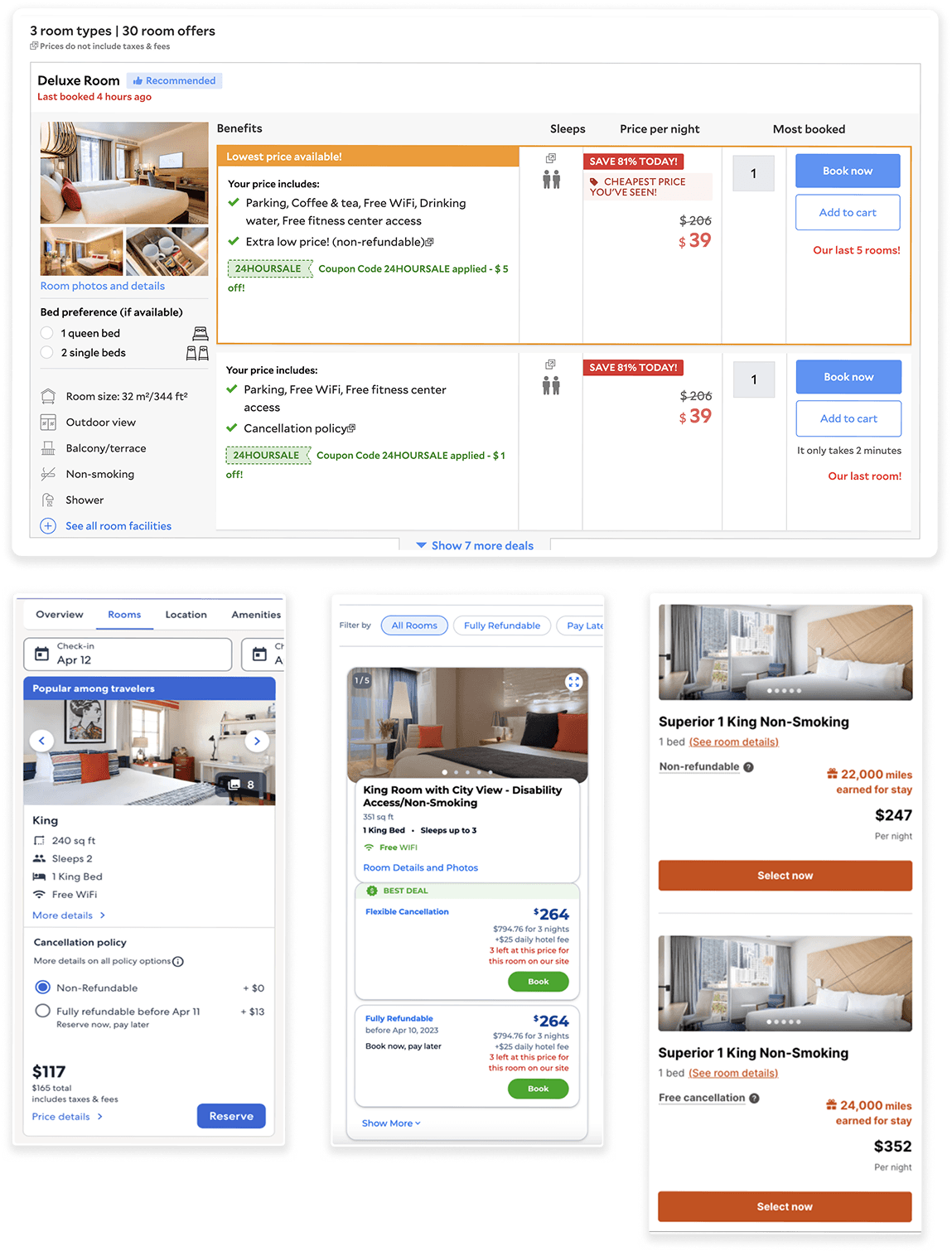
I needed to see how other OTAs approached presenting room offerings, so I took a look at other competitors. All of these sites were different, but had some common patterns: they all had distinct room categories and did a decent job at consolidating a lot of important information on the room cards, making them easy to scan.
A First Pass
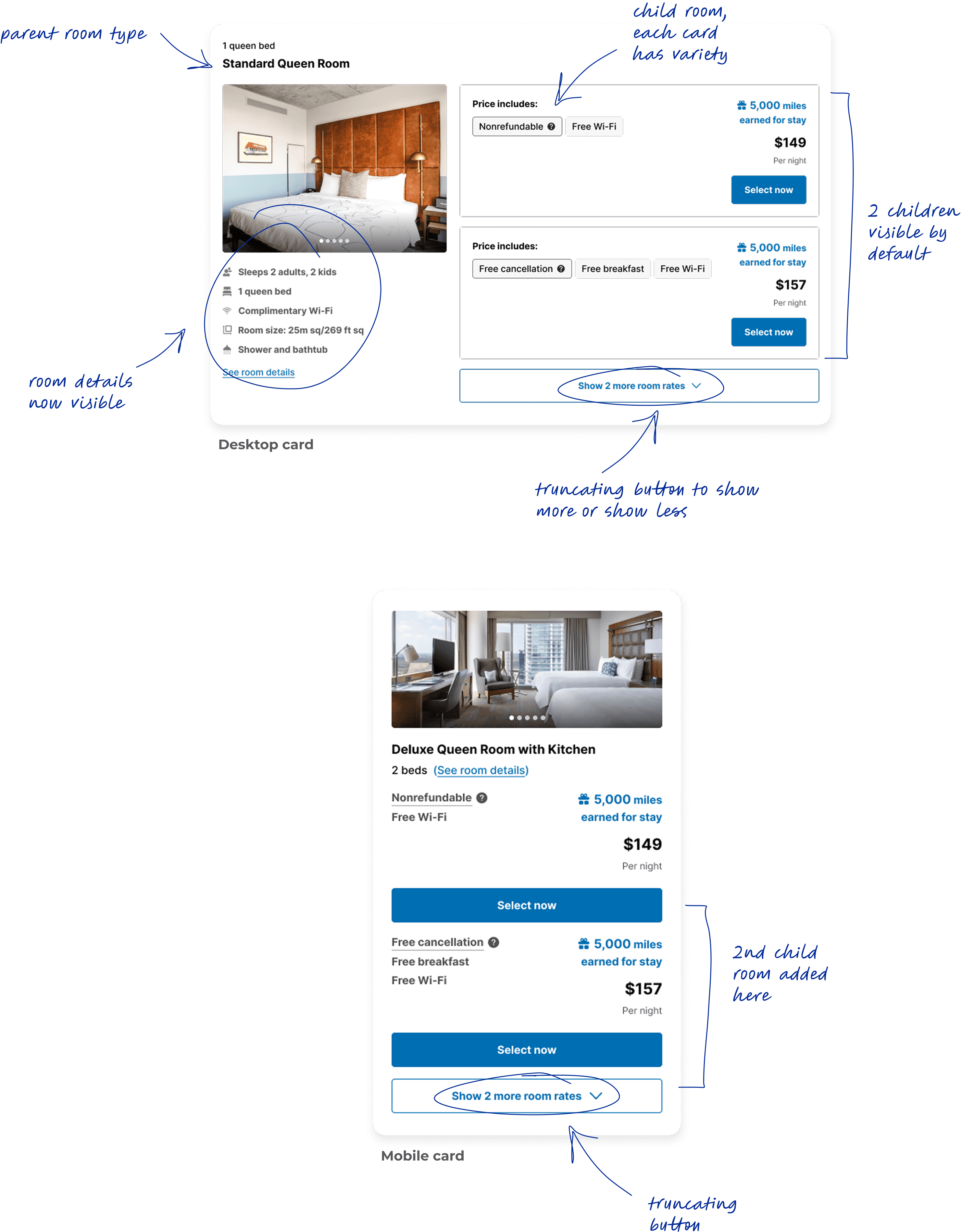
After auditing our room cards and looking at other examples, I attempted a first pass at how this could work. With this iteration, I wanted to focus first on solving for the duplicate rooms and infinite scrolling, so the groupings started to take shape with child rooms getting categorized under parent room types. Any subsequent changes could take place later, but the goal at this stage was to rough out a baseline of the experience, and this felt like a good first step before talking to users.
User Impressions & Insights
The next phase of this work was to conduct interviews. I recruited a handful of people, ranging from experienced, frequent travelers to those who rarely travel at all. I asked them about what they prioritize most when booking travel, their likes and dislikes when it comes to booking a room, their initial impressions on the new designs compared to others and how they measured up to the current experience.
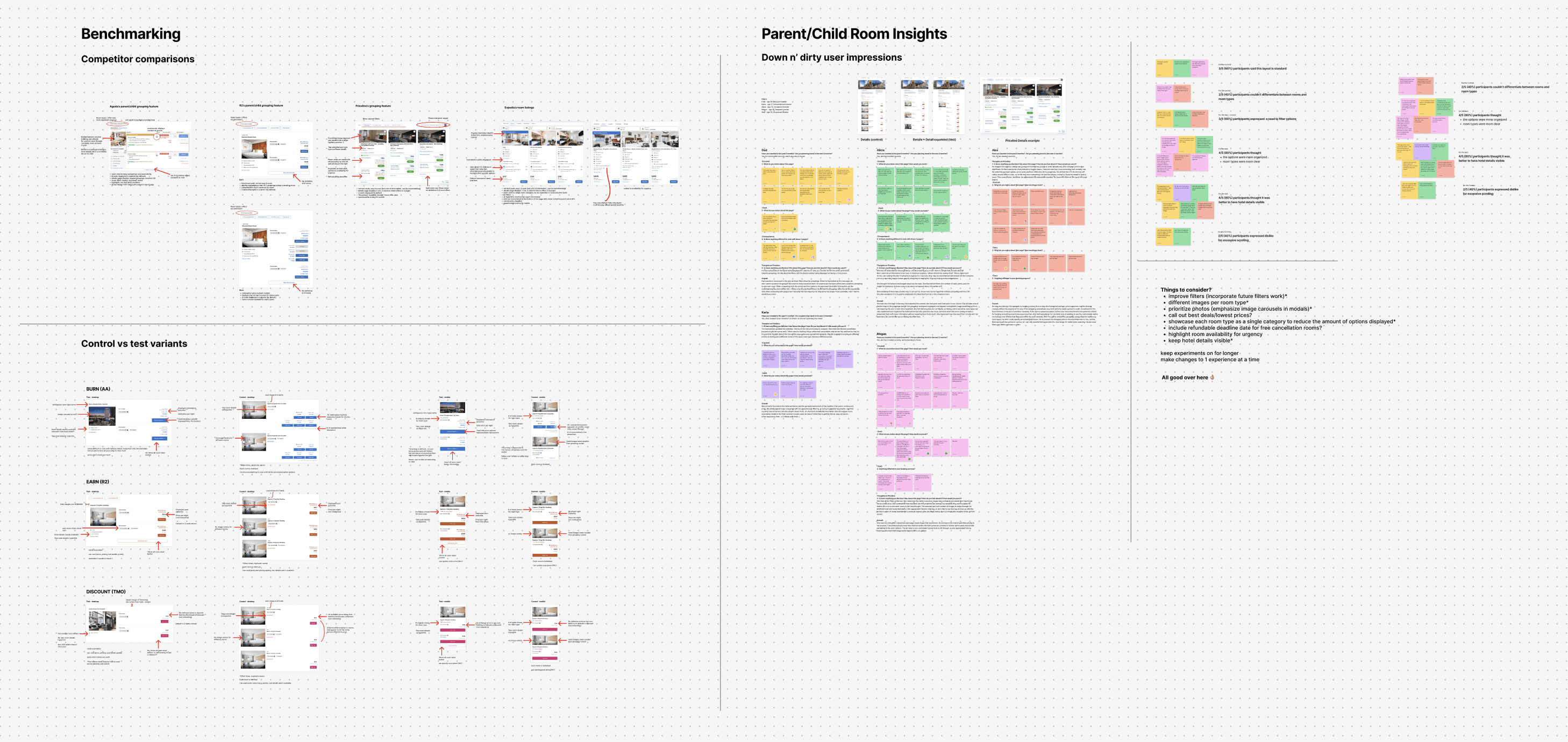
*Complete user impressions linked here
How can we push this further?
New insights helped identify additional considerations to implement:
✏️ emphasize room imagery in a better way
✏️ show a variety in imagery
✏️ have larger images on mobile view
✏️ call more attention to Free cancellation
✏️ be consistent and transparent with price differences (free cancellation, breakfast included, etc.)
✏️ optimize space on mobile
✏️ implement pagination
I shared all these findings with my PM and other stakeholders, influencing what changes we’d want to prioritize and helping defining scope.

New Enhancements
After multiple rounds of internal review addressing usability and feasibility with product, engineers and fellow designers, I landed on enhancements we felt aligned with the insights users had shared.
Here's what changed 👇🏽
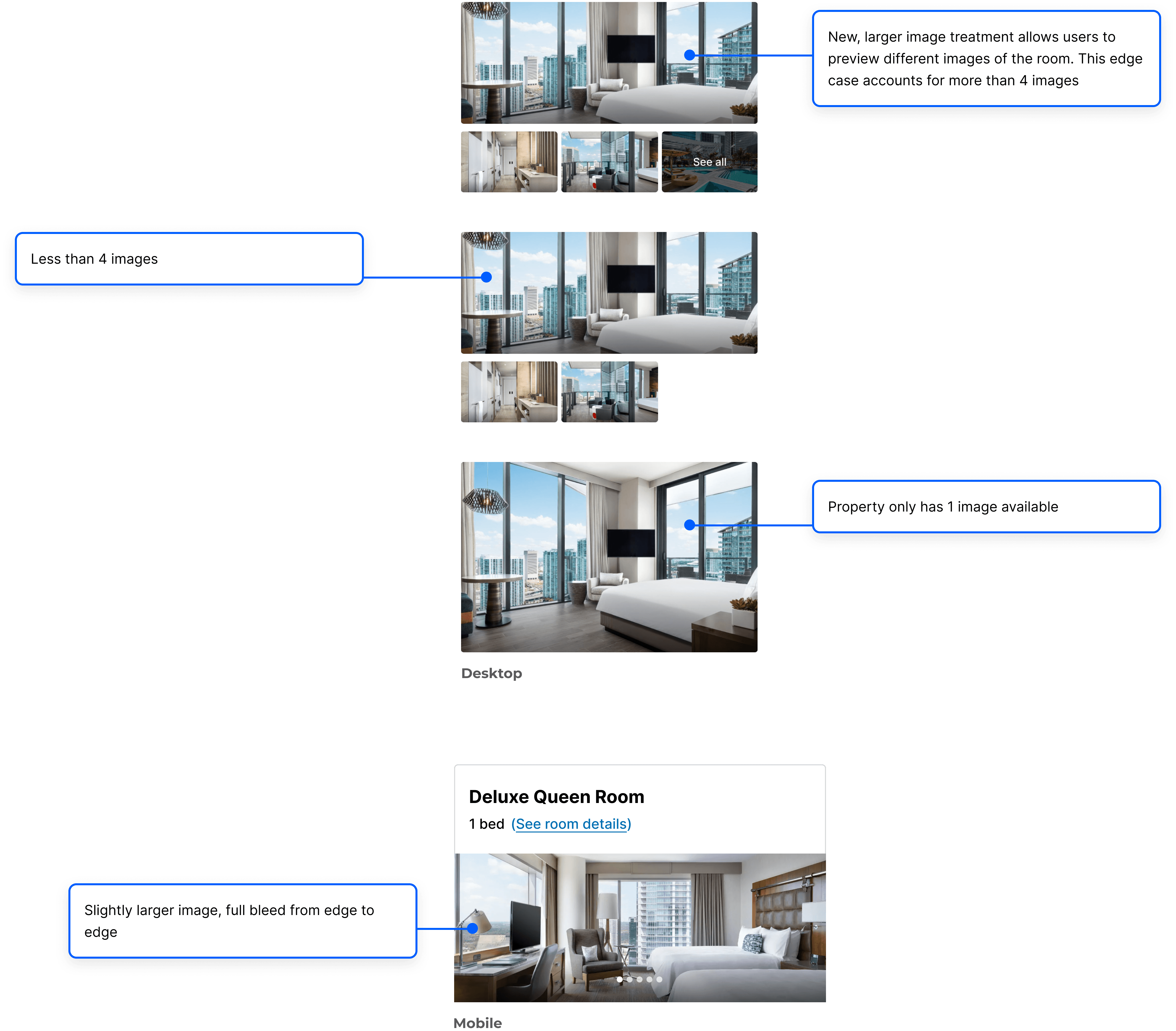
Images & Carousels
Users indicated a desire for larger imagery and image variety, as they needed tasteful visuals to help inform their booking decisions.
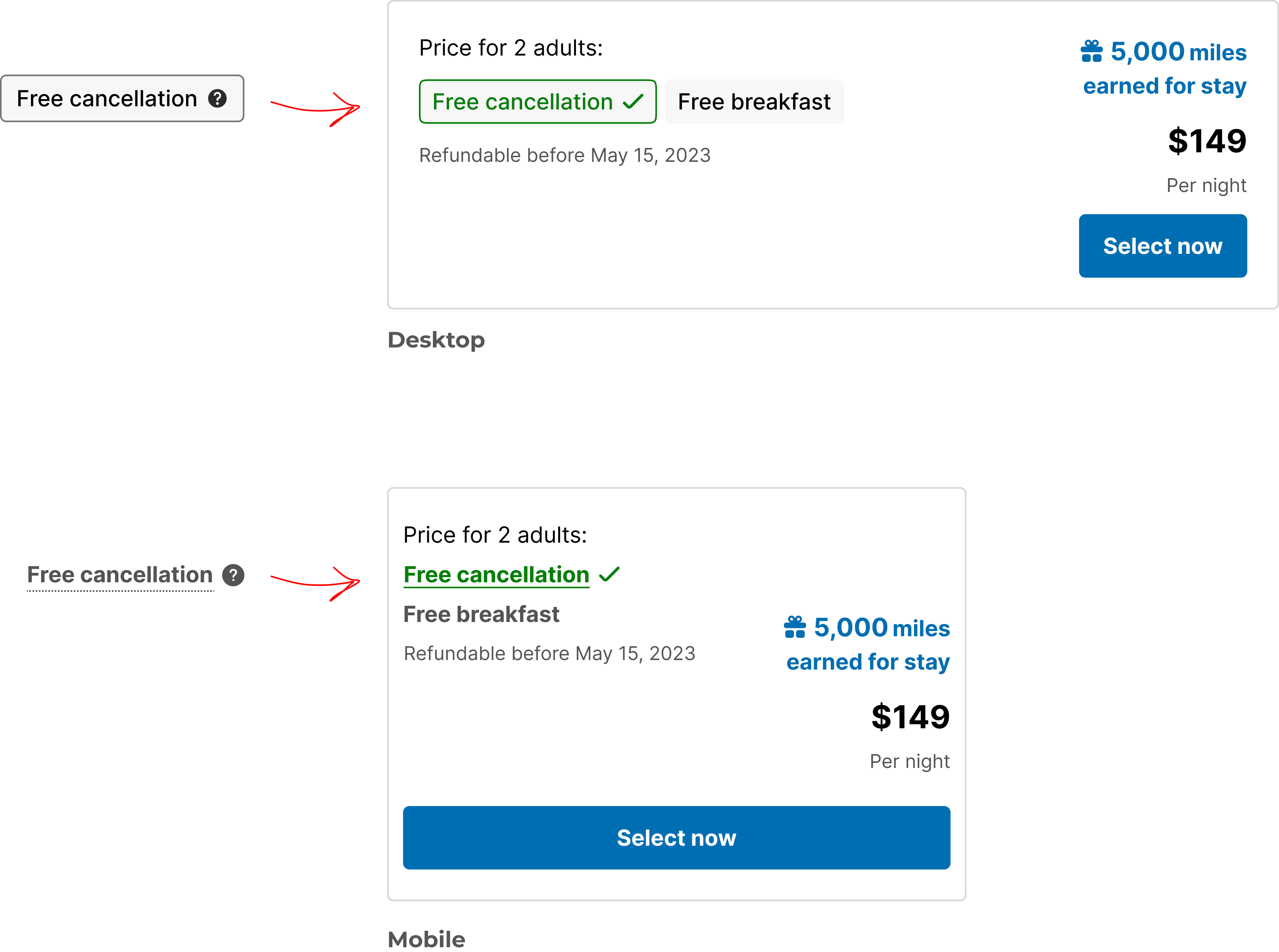
Card Details
Free cancellation is a big motivator for a lot of travelers, so I felt it was important to make it stand out more. We also opted to implement a callout for inclusive guest pricing and refundable deadlines for applicable rooms.
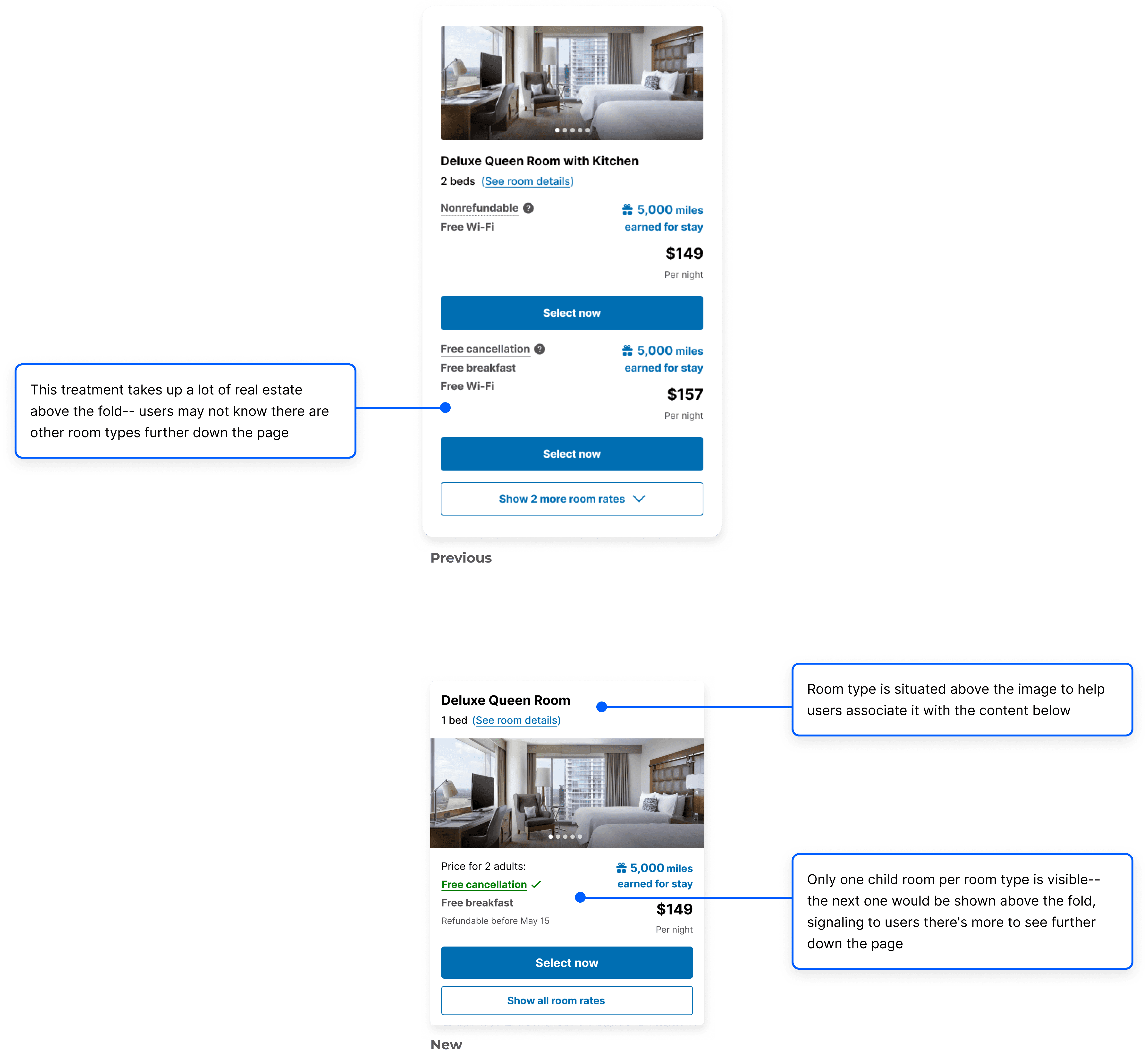
Mobile Groupings
The previous mobile iterations had 2 child rooms per parent room type, taking up a lot of space.
Room Details Modal
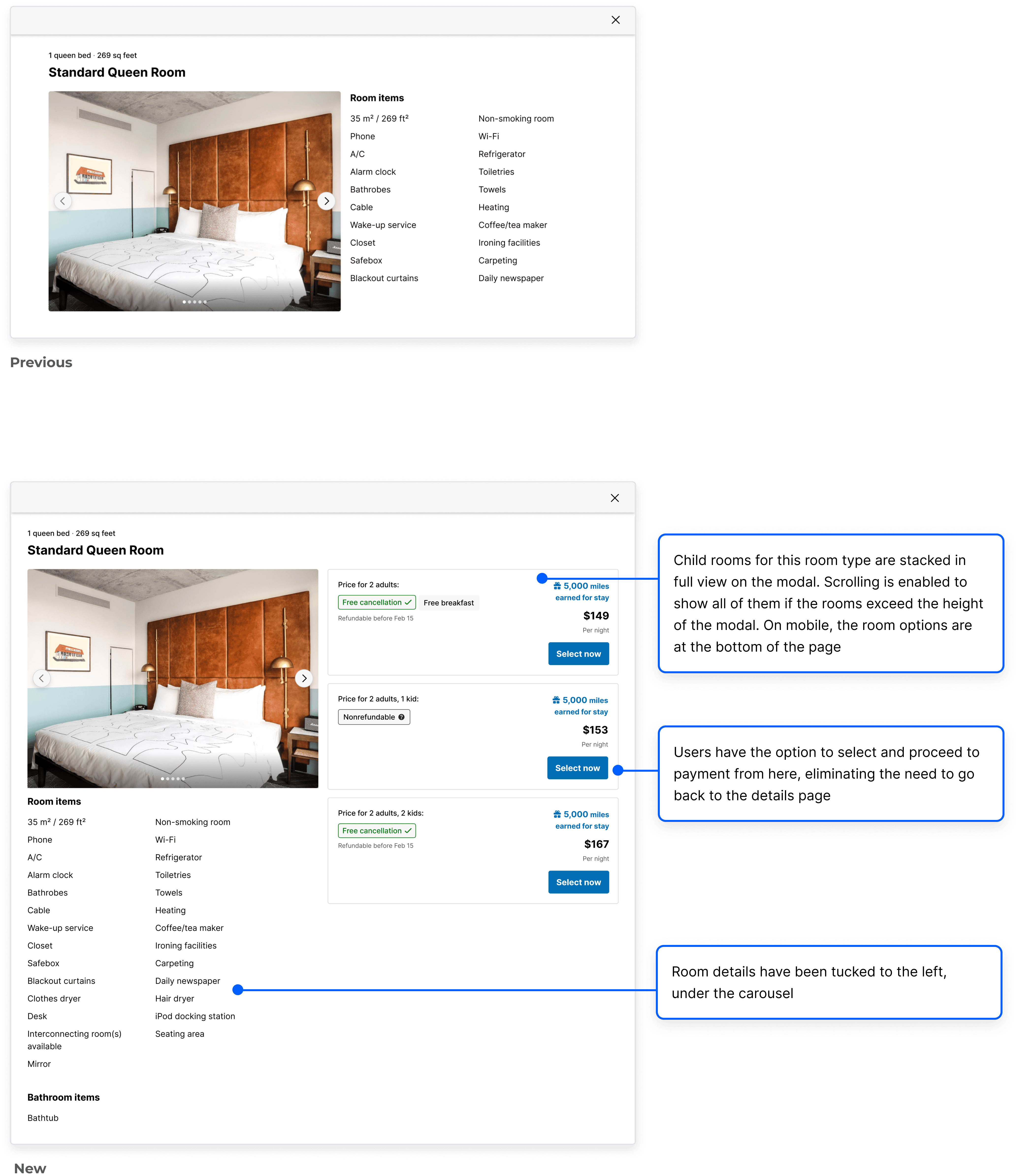
Many people prioritize viewing the room details modal to inform their decision. Whereas the previous modal provided imagery and a list of features, I assessed implementing the same enhancements would make using it more valuable.
A/B Testing
We launched an A/B test of the initial iteration at 50% on our own earn platform, Rocketmiles, then launching on our remaining partner sites shortly after. Within a few weeks, we were thrilled to see the new variant won against the control and customers were liking the new experience! 🎉
Since earn performed well, we kept the groupings live on Rocketmiles. For our other partners with both earn and redemption, we turned off the experiment with the intention to make changes to one experience at a time.
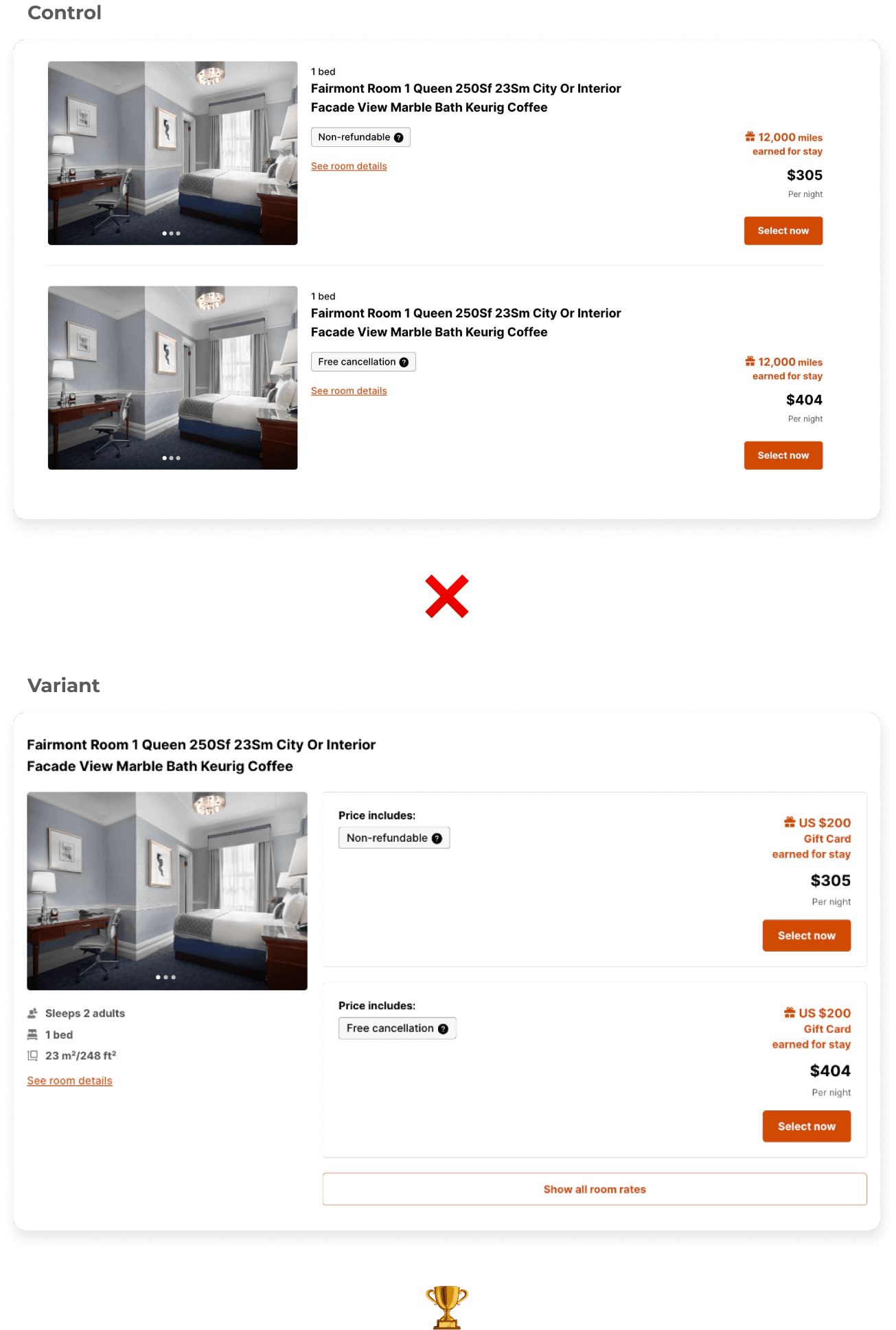
✅ new image carousel on desktop
✅ inclusive guest pricing
✅ updated Free cancellation chip
✅ refundable deadline for applicable rooms
✅ new price-based rewards vs room-based rewards
✅ external bounding box removed
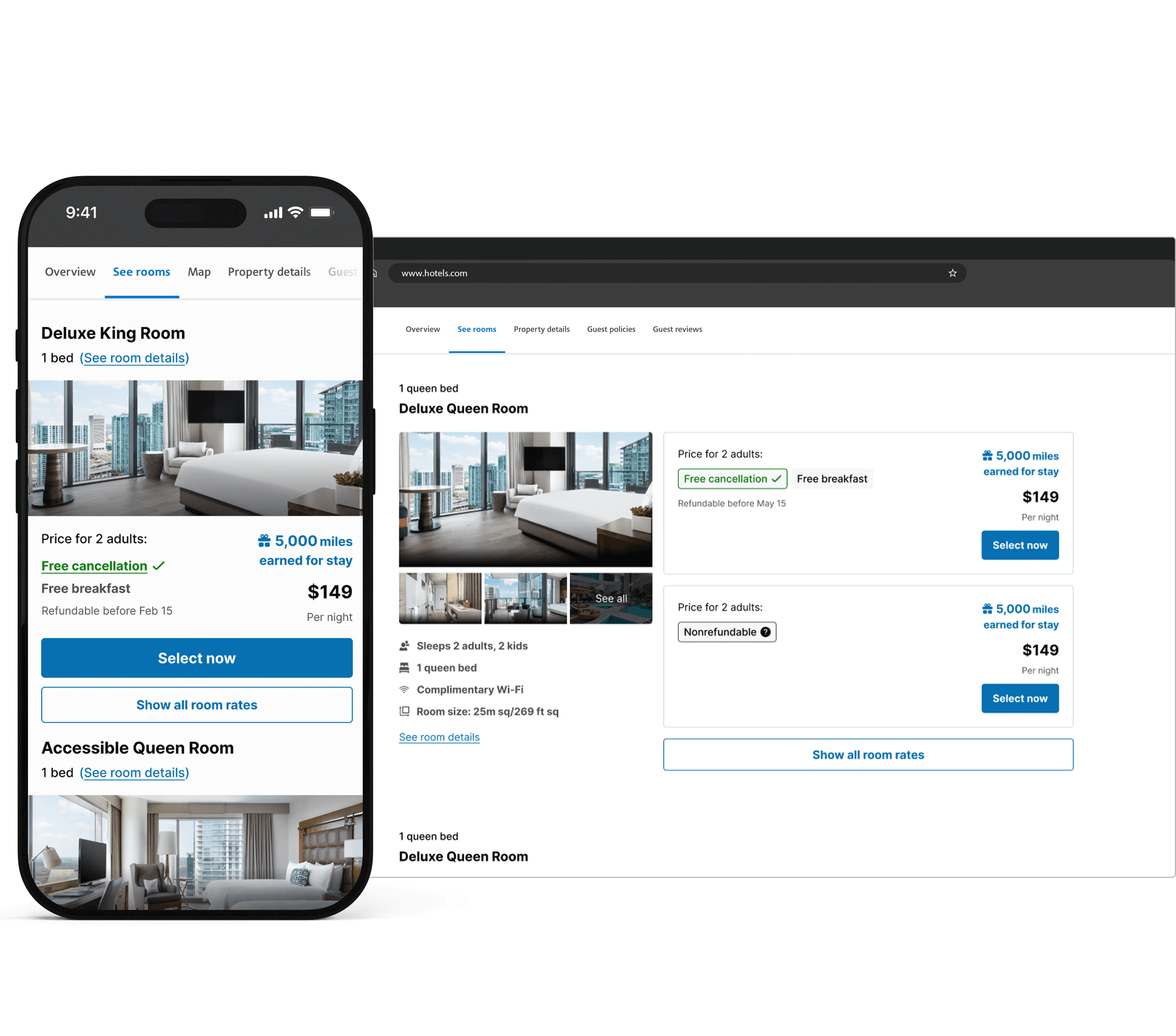
As seen on our partner sites like American Airlines, Lifemiles, Enrich, Miles & More, Emirates, ConnectMiles and many more.
Pictured: live on www.search.rocketmiles.com
The previous room selection experience was less than ideal, and we hoped that by eliminating friction, we’d make the process less daunting and direct users to checkout much faster. These changes increased conversion as well as Total True Margin, thus proving our efforts were successful from a user and business perspective.
Rather than simply receiving and executing design solutions from product, this was an excellent opportunity to really showcase the importance of direct user feedback to inform the improved usability of our site.
Additionally, as an organization without a research team at the time, design often conducted their own, so this was a good way for me to actually speak to users and gather valuable insights.
This was also my first time leading a larger project with the support of a team, so I learned a lot and got to apply these learnings to yield successful results.